Price used: 18-carat gold at €83.89/g of metal, recorded by OrOGramme on 2 November 2026. Gold moves every day, so check the price on the day you read this.
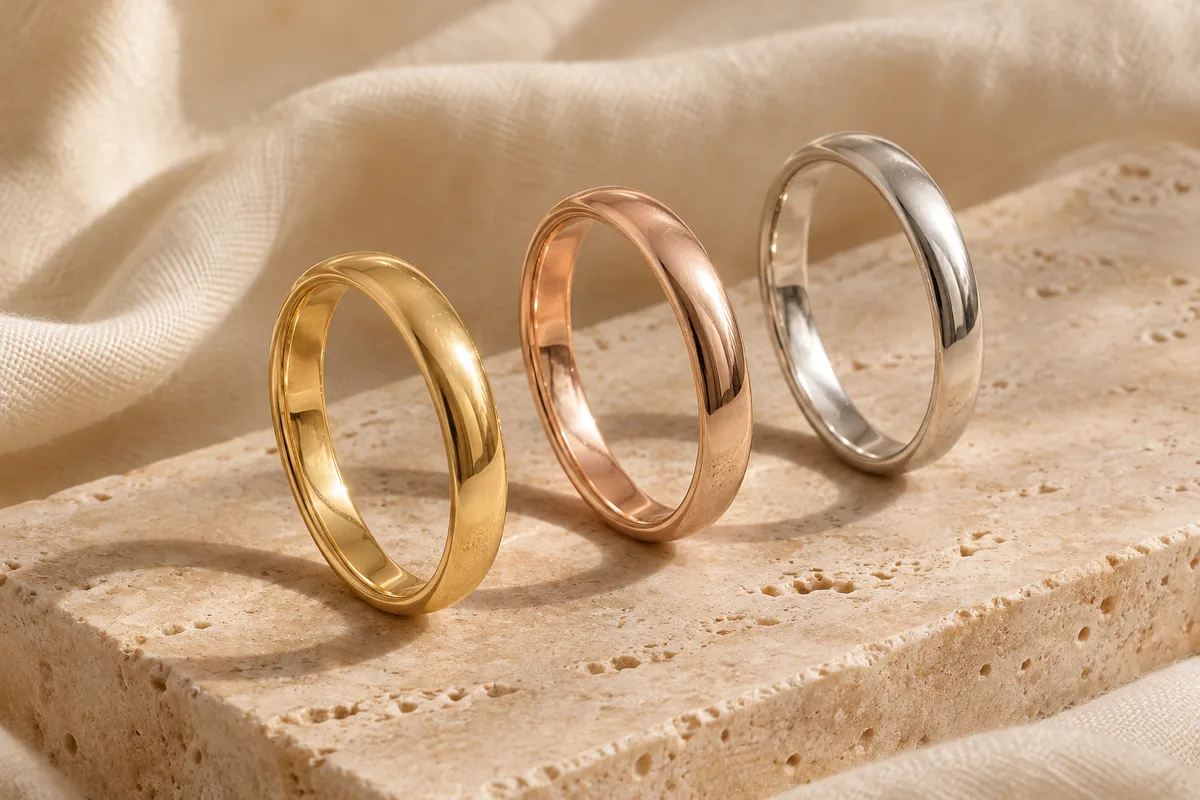
No, the colour doesn't change the value of the gold. An 18-carat piece contains 75% pure gold, whether it's white, yellow or rose: on 2 November 2026, its metal is worth €83.89 per gram in all three cases.
What changes is the remaining quarter, the alloy. It gives the colour, and it explains the small differences in shop prices, upkeep and comfort. Here's how to read all of that before you buy or sell.
Where does the colour of gold come from?
Pure gold is yellow, and too soft for everyday jewellery. In 18 carats, 25% of other metals are added. The mix decides the shade:
| 18-carat gold | Pure gold | The rest (alloy) |
|---|---|---|
| Yellow | 75% | 12.5% silver, 12.5% copper |
| Rose | 75% | about 22% copper, 3% silver |
| Red | 75% | 25% copper |
| White | 75% | silver, copper and zinc, then usually rhodium plating |
These are typical recipes: each maker has its own, but the share of gold is set by the purity. That's what the hallmark guarantees, and it's the whole point of 18 carats, which I explain in why 18-carat gold.
Does the colour change the price in a jewellery shop?
A little, and never because of the gold. The price of a new piece is the metal value plus the making cost and the seller's margin. The metal value is the same for all three colours at equal weight.
The gaps come from elsewhere:
- the work: white gold often goes through an extra step, rhodium plating;
- fashion: a colour in high demand one season can sell for more without containing more gold;
- the design and the brand, as with any piece of jewellery.
To check whether a price is fair, always bring it back to the gram. Across the 1,985 second-hand 18-carat gold pieces tracked by OrOGramme on 2 November 2026, the median price is €180 per gram, and half of them sit between €150 and €198 per gram. The share of making cost and margin in those prices is broken down in how jewellers mark up gold.
White gold: what to know before you buy
White gold isn't perfectly white. Its alloy gives it a slightly grey or yellowish tint, and most pieces get a thin layer of rhodium, a bright white metal, to finish the colour.
That layer wears off over time, especially on a ring worn every day. The piece is still 18-carat gold, but it can drift back to a warmer tone. A jeweller can redo the plating: ask for the price before you buy if a bright white matters to you.
:::warn The trap A shiny white piece isn't necessarily white gold. Rhodium-plated silver, steel, plated metal: check the hallmark and the purity before paying a gold price. The differences between solid and plated gold are explained in vermeil, gold-plated, gold-filled or solid gold. :::
If you're sensitive to metals, ask for the exact alloy: some white golds contain nickel.
Yellow and rose gold: what's different day to day?
Yellow gold is closest to gold's natural colour. It needs no surface treatment, it develops a soft patina and it's easy to repair.
Rose gold gets its tint from copper. The more copper, the redder and harder the metal. Its colour is part of the alloy, so it doesn't wear off like rhodium plating.
Does the colour matter when you sell?
No. A gold buyer pays for the gold inside the piece: weight × purity × price. 10 grams of 18-carat gold are worth €839 of metal on 2 November 2026, whether white, yellow or rose. When it's melted, the alloy is separated and the colour disappears.
The one exception: a piece sought after for its design or brand can sell above its metal value, privately or in a second-hand shop. Again, it's the piece that makes the difference, not its colour. Before you sell, read common gold-buying scams and your rights in France: contract, traceable payment and 48 hours to change your mind.
Work out the metal value of your jewellery at today's price, in seconds.
Frequently asked questions
Is white gold more expensive than yellow gold? Not for the metal: at the same purity, they contain the same amount of gold. A white gold piece can cost a bit more because of the rhodium plating or the design.
Does rose gold contain less gold? No. In 18 carats, rose gold is 75% pure gold, like yellow and white. Only the alloy changes.
Why is my white gold turning yellow? The rhodium layer wears off over time and reveals the alloy's natural tint. A jeweller can redo the plating.
Which gold colour has the best resale value? When you sell to a gold buyer, none: the price depends on weight and purity. Only the design or the brand can beat the metal value.
Sources for the figures quoted:
- Typical compositions of 18-carat yellow, rose, red and white gold, and the role of rhodium: bdor.fr, "L'or blanc", page updated 11 May 2023, accessed 2 November 2026
- Metal value of 18-carat gold (€83.89/g): OrOGramme API, metals.dev source, recorded 2 November 2026
- Price per gram of second-hand 18-carat gold jewellery (median €180.43/g, quartiles €150 and €197.99, 1,985 pieces): OrOGramme API, computed 2 November 2026